Yes, These Books Are Made with AI. No, They’re Not Slop.
On the space between perfect and careless — and why that space might be the most human place of all.
I’m going to say the thing out loud so nobody has to wonder.
Enchantably uses AI. The illustrations are AI-generated. The story frameworks are built with AI tools. The platform runs on Google Cloud, Gemini, and a model with the improbable name of Nano Banana Pro. If that sentence makes you want to close this tab, I understand. I’d like to ask you to stay for a few more minutes.
Because the conversation about AI and quality has gotten stuck, and the stuck version serves nobody: not the critics, not the creators, and definitely not the parents trying to figure out what’s worth their kid’s attention.
First, let’s talk about slop
“Slop” was Merriam-Webster’s word of the year in 2025. It refers to AI-generated content that’s mass-produced, low-effort, and designed to grab attention without offering anything in return. You’ve seen it. We all have. The uncanny Facebook images with too many fingers. The SEO articles that say nothing in 2,000 words. The children’s videos on YouTube with misspelled words and horses hatching from eggs. A recent New York Times investigation found that roughly 40% of videos recommended to kids appear to be AI-generated filler.
Slop is real. The critics cataloguing it aren’t wrong; if anything, they’re undercounting. And I take it personally, because the thing I’ve spent the last year building sits in the exact category that slop has poisoned: AI-generated children’s content.
So let me tell you what slop is, and then let me tell you what Enchantably is, and you can decide for yourself whether they’re the same thing.
Slop is what happens when nobody cares
The defining feature of slop isn’t that it’s made with AI. It’s that nobody looked at it. Nobody asked is this good? Nobody stayed up until midnight tweaking a story arc because the ending didn’t land. Nobody regenerated an illustration four times because the light in the child’s eyes wasn’t quite right. Nobody cared, because caring wasn’t the point. Volume was.
Enchantably is what happens when someone cares too much.
I have built over 400 books in the last year. I’ve read every story arc out loud, sometimes to my boys, sometimes to myself at my kitchen table. I’ve rewritten endings that were technically fine but not surprising enough, refined illustration prompts that made beautiful images but missed the emotional beat of the scene, and agonized over whether a plot twist would land for a four-year-old or sail over their head.
That’s not a process that scales to content farming. That’s a person with a vision and a very late bedtime.
Let’s talk about the third arm
Now for the part most founders would quietly leave out.
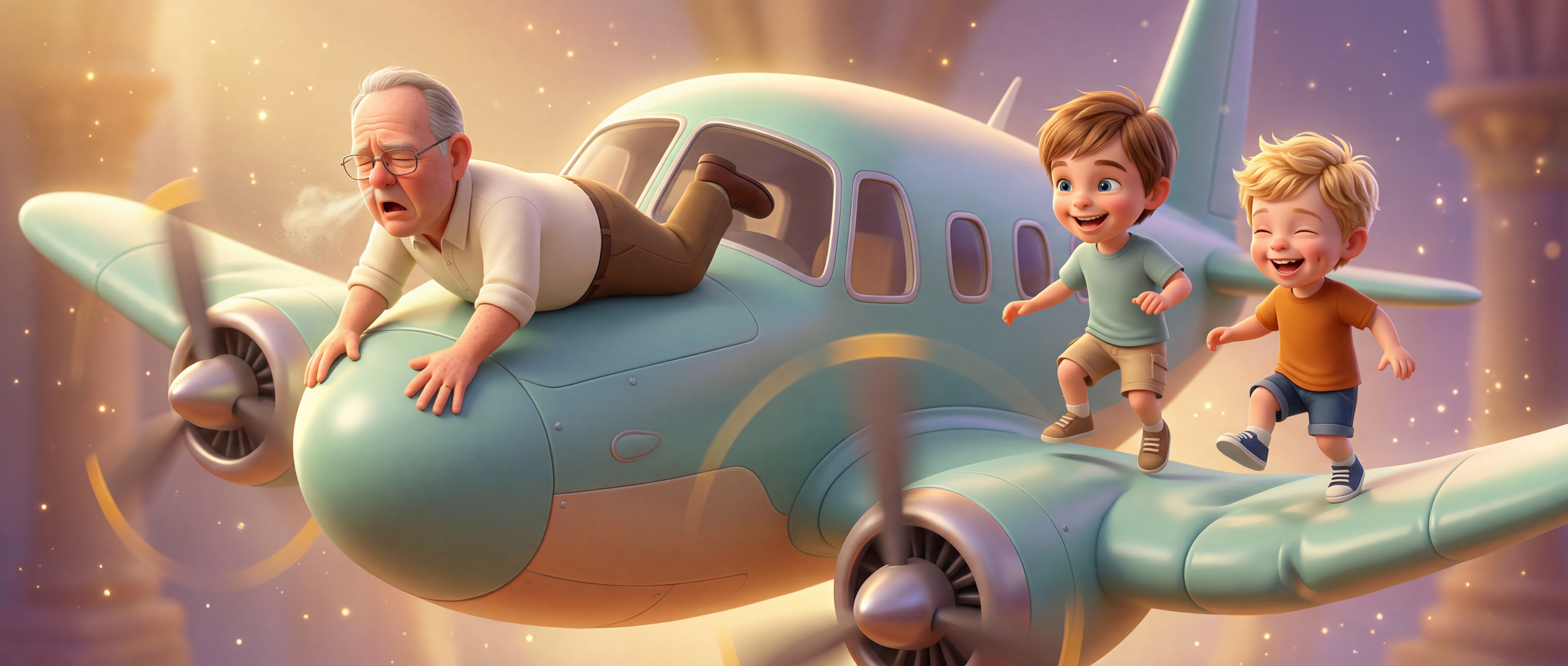
Today, one of the illustrations came back with a third arm growing out of a kid’s torso. Just... a whole extra arm.
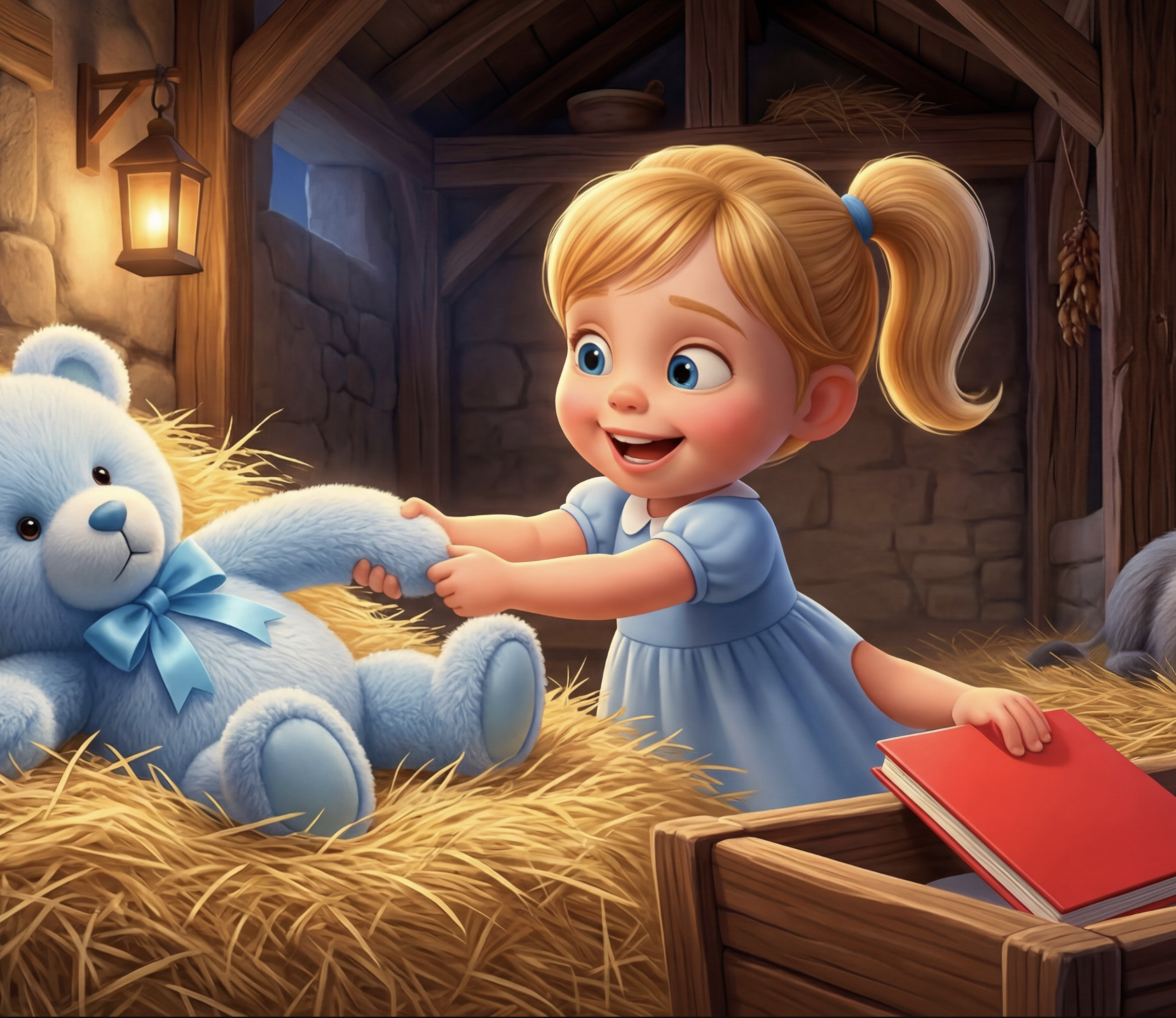
In another illustration, the kid has a lemur tail. Casually hanging out there like it belonged.
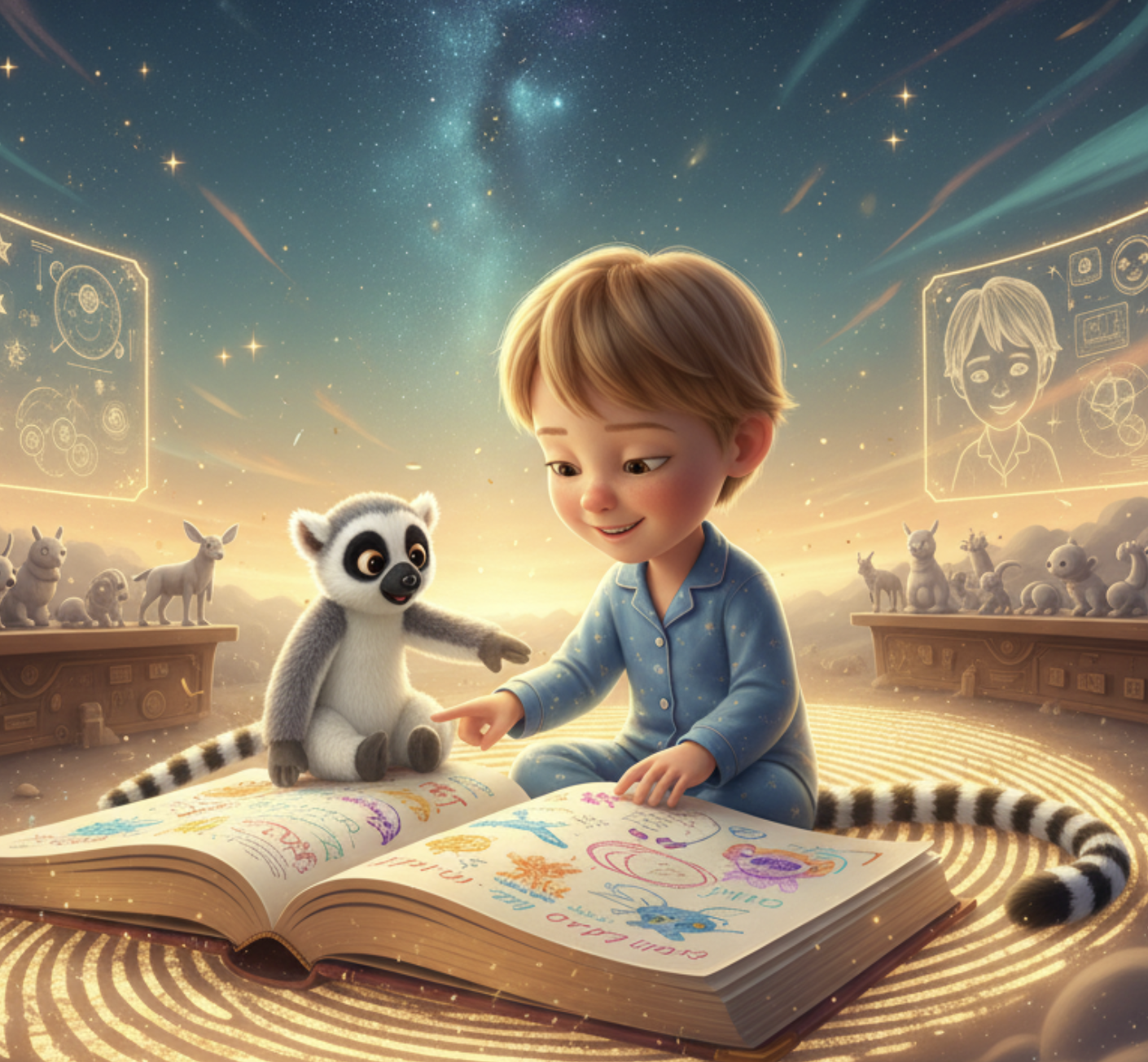
And then there’s this one, which I’m still not entirely sure how to describe.
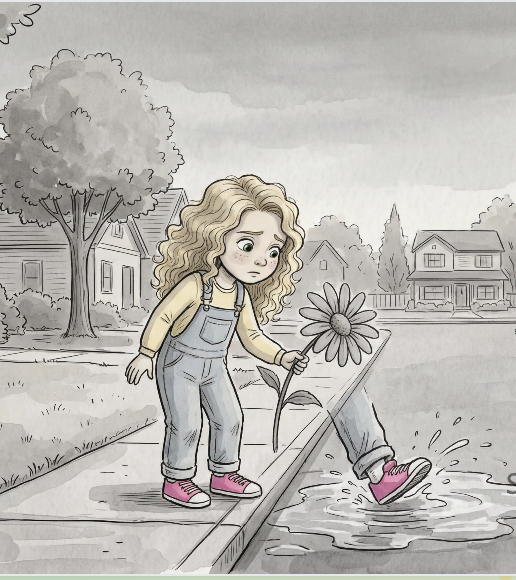
I could pretend that doesn’t happen. I could curate a version of this story where the AI is flawless and every output is gallery-ready. But that’s not the truth, and I’d rather you trust me than be impressed by me.
The truth is: AI image generation is extraordinary and imperfect. In the same breath. Those two things are not in conflict. They’re the reality of a technology evolving in real time, right underneath the products built on top of it.
I built Enchantably knowing this would happen, so the tools to fix it are in your hands. You, the parent, the grandparent, whoever is holding the book, can regenerate an illustration that isn’t quite right. You can rewrite a poem that sounds off-key. You’re not stuck with whatever the AI gives you on the first pass. You get to shape it until it feels like yours.
That third arm? The lemur tail? Quick feedback, one tap, regenerated, gone. The new image kept everything that made the original special: the warmth, the composition, the feeling. Minus the bonus limb. The AI is strong enough now that regeneration doesn’t mean starting from scratch. It means refining.
Will there be odd things in the illustrations? A shadow that falls wrong. A hand that looks slightly dreamy. A poem line that doesn’t quite scan. Yes, almost definitely, and probably a few times.
But you’ll be able to fix it in seconds. If you want the practical playbook, we wrote a whole guide to working with AI illustrations, including copy-paste regeneration prompts for the most common quirks. And I think there’s something meaningful about having that ability: not just receiving a finished product, but having a hand in making it right. It makes the book more yours. It puts you in the creative seat, even if you’ve never thought of yourself as a creative person.
And the things that don’t get caught? The small imperfections that slip through? I think that’s part of it, honestly. Not a flaw to hide, but a quality to hold lightly: the fingerprint of a technology finding its footing. The way a handmade ceramic is more interesting than a factory-perfect one. Not because imperfection is the goal, but because it’s evidence that something was made, not stamped out.
And honestly? If we wait for the technology to be perfect, the kids will be older, and the magic of the giggles over seeing a random tail will fade. Childhood doesn’t pause while we wait for the tools to catch up. The four-year-old who’d lose it laughing at a lemur tail today won’t be four forever. That window is the whole point.
What awe actually feels like
I want to tell you about the distance between where this started and where it is now, because I think people who haven’t been inside the evolution don’t fully grasp it.
When I started Enchantably a year ago, the image models were, to put it generously, promising. The compositions were stiff. The faces were uncanny. The consistency between pages of the same story was a coin flip. I’d generate an illustration and think I can see what it’s trying to do, which is a kind way of saying it wasn’t there yet.
Today, I open Nano Banana 2 and I watch it generate an illustration of a child’s stuffed bear leading them through a moonlit forest, and the light filtering through the trees actually looks like light filtering through trees, and the bear has the slightly worn quality of a toy that’s been loved hard, and I sit at my desk and feel something close to awe.
More than 400 books in, I’ve watched that evolution frame by frame, and I’m still not over it.
And now there’s Lyria 3, Google’s AI music generation model, creating custom songs with real vocals, real structure, verses and choruses and bridges. A child who can not only read a story they’re the hero of but hear a song that was made for their adventure is not experiencing slop. That’s a door opening to a kind of personalization that didn’t exist a year ago. Custom, straight to you. Not mass-produced for everyone. Made for your kid.
The question that actually matters
The conversation about AI-generated content usually gets stuck on a binary: is it AI or isn’t it? As if the tool determines the value. As if a story typed on a typewriter is inherently better than one typed on a laptop. As if the method matters more than the intention.
I think the better question is: did someone care about this?
Did someone read it out loud and listen for where it dragged? Did anyone ask whether the illustrations would make a child feel seen, or build in a moment of surprise, an “aha!” a kid wouldn’t see coming, because children deserve to be delighted and not just occupied? Did a year of late nights and hard choices and creative obsession go into making the thing as good as it could possibly be?
Because that’s the line, and it doesn’t run between AI and human. “Made with AI” names a tool. “Made without care” names a failure. Slop is guilty of both, and we keep prosecuting the wrong charge.
This is not a finished thing
I want to be clear about something: Enchantably is not done. It’s not a polished product being handed down from on high. It’s a living, breathing thing that gets better every week: sometimes because the AI improves, sometimes because I improve, and sometimes because my 4-year-old gives me a look during a bedtime story that tells me exactly which page isn’t working.
I’m building in public, honestly, and with an uncomfortable amount of love for a thing that some people will look at and see only the letters A and I.
I get it. The skepticism is earned. The internet is drowning in content that nobody asked for and nobody checked. If you’ve been burned by slop, your guard is up, and it should be.
All I’m asking is that you look at the books. Read one. Watch your kid’s face when their name shows up on the page and their bear is right there next to them, walking into an adventure that was built carefully, imperfectly, obsessively, just for them.
And then tell me that’s slop.
Ready to Create Something Magical?
Discover personalized storybooks starring your child's favorite toy, pet, or loved one.
Explore the Magic TodayJoin the Conversation
Where do you draw the line between AI-generated content that’s worth your time and content that isn’t? I think about this constantly and I’d love to hear how other parents are navigating it.