
The Language of Bedtime
When the bookshelf in your language doesn’t reflect who you want your kids to become, you build the bookshelf yourself.
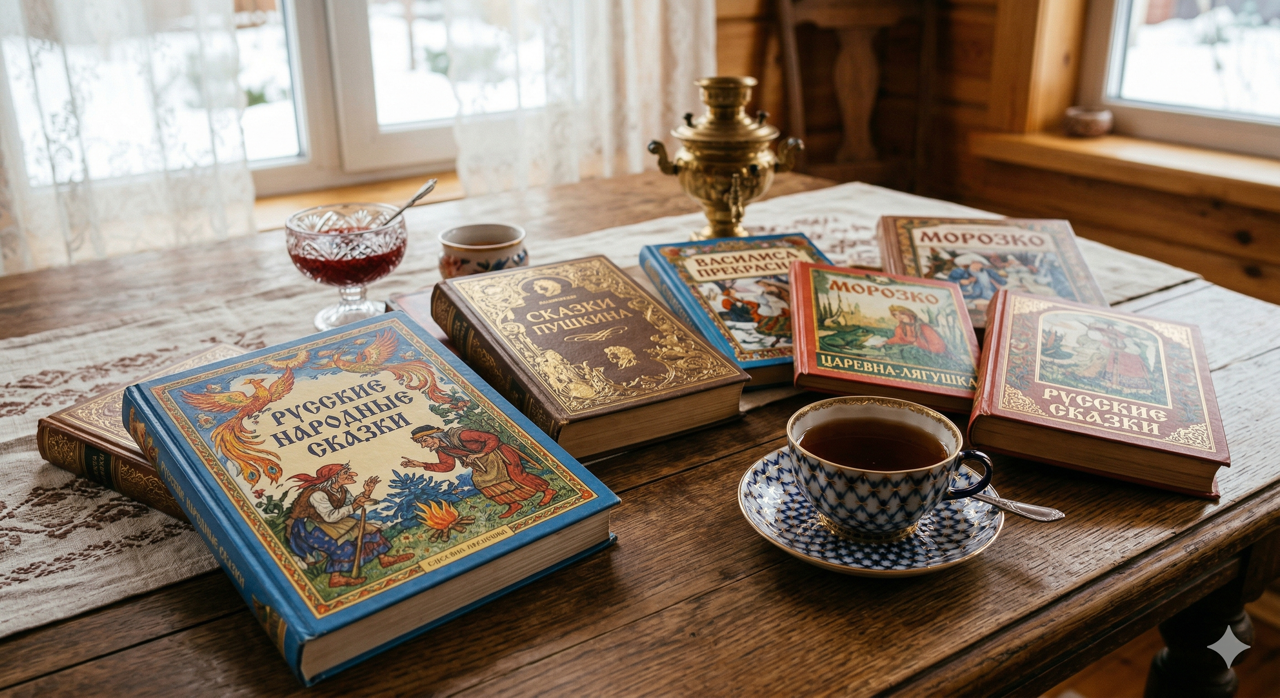
There is a particular kind of loneliness that comes from wanting to share your language with your children and having nothing good to read to them in it. For years I didn’t have a name for it. The closest one I’ve found is grief.
I’m Russian, from Siberia. My boys were born here in Virginia. They hear English all day: at school, on screens, from friends, from their dad. The only time they hear Russian consistently is from me. And for a long time, the most natural way I knew to give them that, to make it feel like a living, breathing, beautiful thing and not just Mom’s other language, was to read to them at bedtime.
Except I couldn’t find the books.
The Empty Shelf
If you’re a multilingual parent, you know this feeling. The English-language children’s book world is enormous: beautiful picture books, clever stories, shelves and shelves of options for every age and interest. You can find a book about a kid who’s afraid of the dark, a kid whose grandma has Alzheimer’s, a kid who wants to be an astronaut, a kid whose family looks exactly like yours.
Now try to find that in Russian. Or Arabic. Or Tagalog. Or Urdu.
The shelf is either empty or decades old. The books that exist are often reprints from the Soviet era, charming in their way, but written for a different world. The illustrations feel dated. The stories carry assumptions about childhood that don’t always match the values you’re trying to build at home. And the new options, when they exist at all, are often stiff translations of English bestsellers that lose their magic in transit.
So you end up in a lonely middle ground: you want your child to love your language, but you don’t love what’s available in it. The word for what you feel in front of that shelf isn’t pickiness. It’s longing.
The Stories I Grew Up With
I want to be honest about this, because I think it matters. I love Russian literature. I grew up on it. The poetry, the fairy tales, the richness of the language itself. There is a depth there that I carry with me and that I want my children to know.
But many of the stories I grew up with are not the stories I would choose to hand a small child at bedtime in 2026.
A lot of classic Russian children’s literature carries a quiet undertone of endurance over agency. The heroes suffer beautifully. They wait. They are tested and they survive, but the message is often closer to “bear it” than to “you can change this.” Loyalty and sacrifice are rewarded. Boldness and self-determination, less so.
And then there’s the other thread, the Soviet one: “it’ll be done for you.” The magic pike grants your wishes. The firebird solves your problems. Emelya lies on the stove and everything works out anyway. The hero doesn’t strive; he gets lucky, or he gets rescued, or the system provides. It’s a worldview baked into the stories: don’t reach too far, don’t want too much, and someone or something will take care of it.
That’s not a criticism. Those stories were shaped by their time and their culture, and there is real beauty in them. But when I sit with my boys at night and I have ten minutes to put a story into their hearts before sleep, I don’t want the message to be “endure” or “wait for someone to fix it.”
I want the message to be: you are brave, you are loved, and the story is yours to shape.
When You Can’t Find It, You Build It
This is the part of Enchantably’s origin story that I don’t always tell, because it’s personal in a way that feels vulnerable.
I didn’t just want my boys to see their names in a storybook. I wanted to read it to them in Russian. I wanted the words to be mine, in the language that feels most like home to me, telling a story about them, with characters who look like their toys, having adventures that match their actual personalities.
I wanted a book that didn’t exist. So eventually, stubbornly, I made one.
And when I saw what it meant to them, a story in Mama’s language, starring their world, with illustrations that felt magical and modern, I realized this wasn’t just a personal project. This was a gap that millions of families were living with.
The Multilingual Bedtime Problem
When I started talking to other multilingual parents, I learned that almost everyone has a version of this story.
The Korean mom who wants her daughter to hear Korean at home but can only find workbooks and flashcards, not stories that spark imagination. The Arabic-speaking dad who reads translated Peppa Pig books because there’s nothing better available. The grandmother who speaks Hindi to her grandchildren over FaceTime and wishes she had a beautiful book to hold up to the camera.
Language doesn’t survive on grammar drills. It survives on stories. On lullabies, on jokes, on the plot of the book your kid begs for every night. If the only interesting stories are in English, that’s where their hearts will go. Not because they don’t love your language, but because you can’t compete with a good story using a mediocre one.
Creating the Narrative
There is something quietly radical about being a parent who says: the stories that exist for my child, in my language, are not good enough. So I will make better ones.
That’s not entitlement. That’s the deepest form of care. It’s deciding that your child’s imagination is worth investing in. That your language deserves to be the language of adventure, not just the language of “say thank you to Babushka.”
This is what I mean when I talk about creating your own narrative. Not just the story in the book, but the story of what your language means in your child’s life. You get to decide whether Russian (or Korean, or Arabic, or Tagalog) is the language of obligation or the language of magic.
Your language deserves to be the language of bedtime magic, not just the language of “eat your soup.”
A Note to the Parents Doing This Alone
If you’re the only one in your household who speaks your language to your kids: I see you. It’s exhausting in a way that’s hard to explain to people who haven’t lived it.
You’re carrying an entire culture on your shoulders at bedtime, and some nights you’re too tired to do it. Some nights you just read in English because it’s easier. I do it too. And then you feel guilty.
You don’t need to feel guilty. You need better tools. You need a bookshelf, even a small one, full of stories in your language that are so good, so beautiful, so perfectly theirs, that reaching for them at bedtime feels like a gift, not a chore.
That’s what I’m trying to build. Not just for my family. For yours.
One story at a time, in whatever language feels most like home.
Ready to Create Something Magical?
Discover personalized storybooks starring your child's favorite toy, pet, or loved one.
Explore the Magic TodayJoin the Conversation
Are you raising kids in more than one language? What’s your biggest struggle at bedtime — finding good books, staying consistent, or something else entirely? And if you grew up with stories from another culture: is there one you loved but wouldn’t hand to your own kid today? What changed?