
Why You Won't See Kids on Our Site
On UGC testimonials, children's privacy, and why we built a free preview instead of asking parents to put their kids on camera.
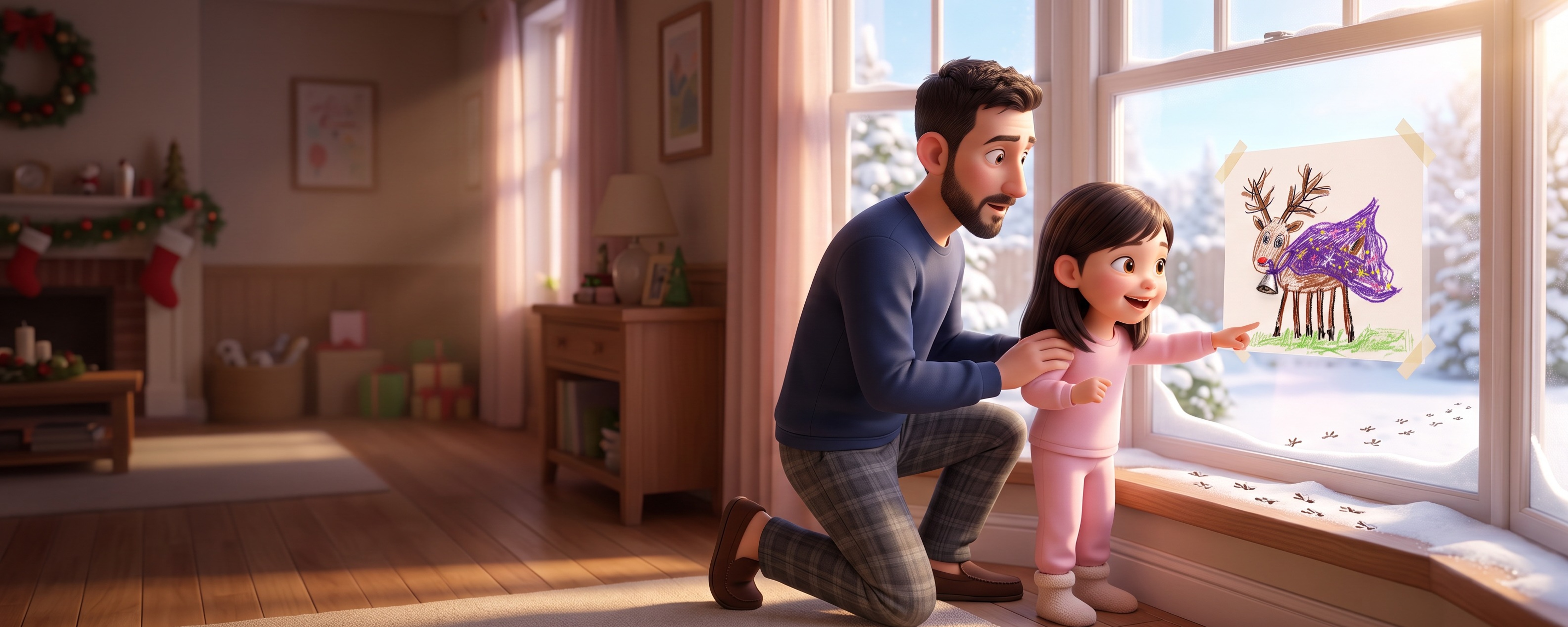
A few weeks ago a children’s footwear company called Bearfoot Tribe announced they were removing every photo of a child’s face from their social media. Their reason was Meta’s updated business terms, which could allow automated crawlers to access and collect content from business pages. They did not know exactly what that meant yet. They decided it did not matter. If there was a chance a child’s photo could be used in ways nobody consented to, they were not going to wait to find out.
I read their post and felt two things at once. The first was respect. The second was recognition. Because I had already made that decision for Enchantably, months earlier, for a different reason.
The ask I could not make
Every children’s brand playbook says the same thing. Get testimonials. Get video of real kids using your product. Get parents to share their child’s reaction on camera. Put those clips on your website, your ads, your landing pages.
I understand why it works. A three-year-old squealing over a book with their face in it is the most convincing thing you could show a parent who is deciding whether to try this. I know that. I have watched dozens of those videos from other personalized book companies.
I could not ask for it.
Not because parents would say no. Many would say yes. That is actually the part that bothered me. A parent who loves your product will happily film their kid if you ask. Some will do it for free. Some will do it if you give them a discount. And there is an entire industry of UGC creators where parents are paid to put their children on camera for brands.
A parent who loves your product will happily film their kid if you ask. That is actually the part that bothered me.
The child did not agree to any of that. The child is three. The child just liked the book.

What Enchantably holds
This is the thing I keep coming back to. Parents use real photos of their children to make these books. That is the product. A family uploads a photo of their kid, and the AI paints that child into sixteen pages of a story where they are the hero.
Those photos are the most private thing a family can hand a company. I know that. It is why Enchantably is built on Google Cloud’s enterprise AI, where uploaded photos are never used for model training. It is why families can delete everything from their account at any time. It is why we went through a full data audit and rewrote our privacy policy to match exactly what the code does, not what a lawyer thought sounded good.

So it would be strange, after all of that, to turn around and ask parents to put their child’s real face on my Instagram so I can sell more books.
The alternative to social proof
Here is what we do instead. Every book on Enchantably is free to start. You upload one photo. The AI creates your child’s character, writes the poem, and paints the cover and the first three illustrated spreads. You see all of that before you pay anything. Before you even make an account.
Then you sit with your kid and read those three pages.
If they want to know what happens next, that is how you know it is the right book. Not because a stranger’s child squealed on a video. Because yours did, in your living room, with you.

That is the only testimonial I need. And the child never had to be on camera for it.
What you will see on our site
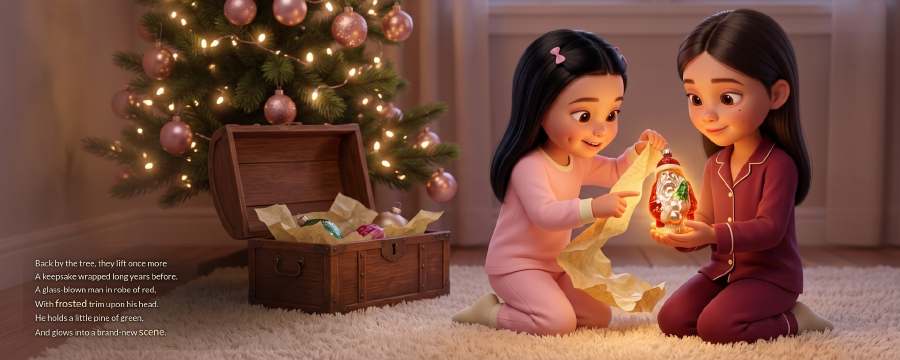
You will see illustrated characters. Painted versions of children, pets, toys, and families, inside storybook scenes. Those are the product. They show you what the book looks like. They do not show you a real child’s face.
You will not see UGC testimonial videos. You will not see “real reaction” clips. You will not see identifiable photos of anyone’s children. Not because we do not have happy customers. Because I do not think a child’s face should be the cost of proving that.
Bearfoot Tribe said it well: “Your child’s privacy matters. We don’t feel comfortable taking chances with something so precious, particularly when technology is evolving faster than our ability to control how images are used.”
I agree. And for a company that asks families to trust us with their children’s photos, the bar should be even higher.
So we built a free preview instead. That is our proof. Read three pages with your kid. You will both know.
See your child in a story
Upload one photo. See the cover and three illustrated pages, free. No account required. No child’s face on our marketing. Just a book you read together.
Start a Free PreviewJoin the Conversation
How do you feel about brands using children in their marketing? Where do you draw the line between sharing a moment and using a kid to sell something?